
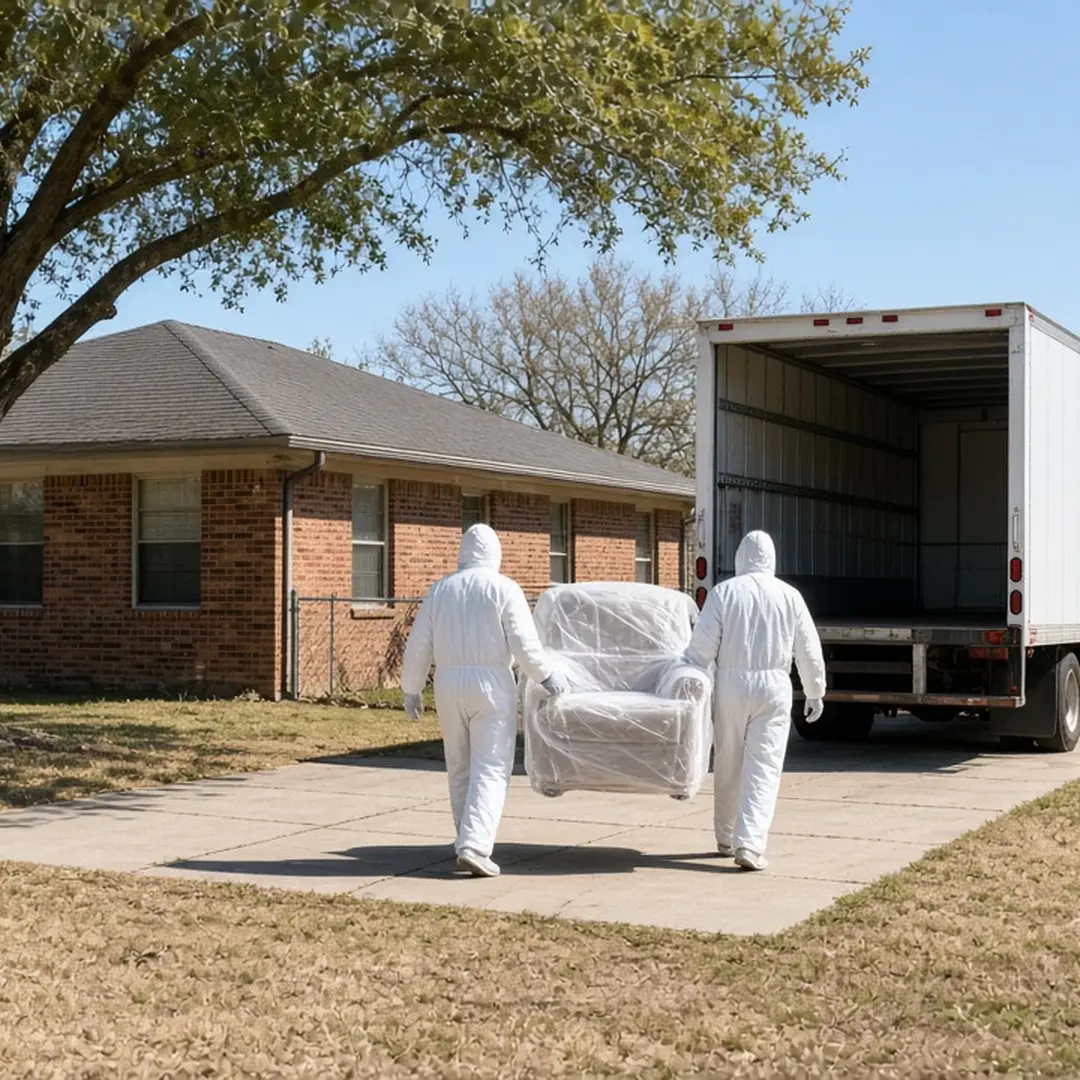
How a Death Changes a Closed House
A death in a closed house changes it from the floor up. Fluid seeps through a recliner, a mattress, or carpet into the pad and the subfloor or slab, then spreads sideways under baseboards and into the next room. Flies arrive within days. The smell settles into drywall, ceilings, cabinets, clothing, and the duct system, and opening the windows does nothing to its source.
We take the source out first. Every porous material holding fluid leaves the house, and the deodorizing starts only after that.
Who Is Found Too Late in Fort Worth
The people found too late are, in case after case, the ones living alone. The American Community Survey counts 27,387 Fort Worth households made up of one person 65 or older, and a fall, a stroke, or a heart attack in one of those homes can go unnoticed until mail stacks up or a neighbor smells something at the door.
Heat makes each day count. At Fort Worth Meacham Field, NOAA's 1991 through 2020 normals count 105 days a year reaching 90°F or more. When the air conditioning is off or broken, the inside of the house climbs past that, and fluid and odor spread faster. On the first visit, we seal the room and the closest air registers so nothing moves further while the scope is signed.

Who Comes Before the Cleanup
The Tarrant County Medical Examiner comes before the cleanup. Texas law sends deaths that occur without medical attention to the medical examiner, and investigators remove the decedent before releasing the home. The office handles release to a funeral home once the next of kin picks one and signs the release form.
After the release, leave the house closed, keep the thermostat where it was, and stay out of the affected room. If the house is headed for a sale, Texas Property Code Section 5.008 gives sellers no duty to disclose a natural death unrelated to the property's condition. Then call us to book the walkthrough.
What We Remove and Treat
The removal list traces wherever fluid seeped and the smell traveled.
- Recliners, sofas, mattresses, and box springs the decedent was found on or near
- Carpet, pad, tack strip, and vinyl or floating plank flooring that fluid reached
- Subfloor panels, and drywall and baseboards where fluid wicked upward
- Insect activity, cleared from floors and window sills and the area treated
- Clothes, linens, and curtains carrying the smell, held for the family to decide on
- Air registers, returns, and the nearby duct runs, cleaned and deodorized
Work is performed by independent professionals.
How We Get the Smell Out
Getting the smell out takes four steps in a fixed order. First, every porous material that holds fluid leaves the house. Second, we clean and disinfect the slab or subfloor and the framing, and seal stained wood that stays. Third, the air and remaining surfaces get treated through the whole house. Finally, we close the house, come back later, and check again, and the job stays open until the smell is gone.
What Unattended Death Cleanup Costs
Unattended death cleanup costs climb with every day before the person was found. Hourly rates run $200 to $300 per Fixr, and HomeGuide passes along Servpro's figure of as much as $10,000 for a death left undiscovered. These are national figures, not Fort Worth quotes. Rooms involved, how deep the fluid went, and the square footage of floor and wall removed decide your price, as our crime scene cleanup cost page explains. The walkthrough gets you a written price.
Frequently Asked Questions
Who books the cleanup after an unattended death?
The person responsible for the property books it. For a home the decedent owned, relatives or the estate's executor make the call. In a rental, the landlord or property manager handles the unit, and the tenant's representative handles the belongings. Whoever can sign for the property calls 123-456-7890 once the medical examiner releases the home.
Will air fresheners or fans fix the smell?
Air fresheners cover the smell for an hour, and fans push it into rooms that were clean. The odor comes from fluid inside the furniture, flooring, and subfloor, so it returns whenever the house warms up or closes. Fans can also spread insects and contaminated dust. Keep that door closed, and the house too, until the soaked items are gone.
How long does the cleanup take?
If the person was found within a few days and only one room is involved, plan on one to two days. Weeks before discovery, or fluid that spread into another room or down to the subfloor, push the job to three days or longer. The written scope gives the expected days before anyone starts.
Can things in other rooms be saved?
Most things in other rooms can be saved. Dishes, tools, jewelry, electronics, and hard furniture clean well. Upholstered pieces, mattresses, and clothing in other rooms pick up odor over time, and those get treated or set aside depending on how strong the smell is. Soaked items stay until the family approves their removal.
Does the family owe the medical examiner anything?
Families pay nothing to the Tarrant County Medical Examiner for the exam, which state law requires. The funeral home the family chooses may bill for moving the decedent, and copies of reports carry their own fees. Cleanup gets billed on its own to the owner or the estate.